A real conversation about leadership, climate, and culture.
To quote Joe Byerly: “I want to start a conversation.”
Here’s the opening statement:
“Sometimes you may have to temporarily sacrifice climate in order to set the groundwork for the desired long-term culture.”
It’s a bold—and admittedly abrasive—statement. But I believe it’s worth wrestling with. Because too often, we shy away from the hard conversations, fearing backlash or discomfort.
And yet, leadership isn’t about comfort. It’s about transformation. And transformation often requires doing things that won’t win you any popularity contests.
Climate vs. Culture: What Problem Are You Trying to Solve?
As leaders, we must have the wisdom and emotional maturity to recognize when micro-cultures within our organizations are actively harming the mission. That doesn’t mean you should rule with an iron fist or ignore input.
In fact, it’s the opposite. Real leadership involves reflection, dialogue, and strategic foresight.
- Talk to trusted agents inside the unit.
- Consult mentors who will challenge your blind spots.
- Use tools like whiteboarding or mind-mapping to think through second- and third-order effects.
But ultimately, you must have the courage to act.
And that means asking the hard question:
What problem are we really trying to solve?
If the issue is cultural—deep-rooted behaviors, attitudes, or norms—then short-term hits to morale may be necessary. The key is keeping your eyes on the long game: a healthy, high-functioning organizational culture.
Let me give you an example from my own experience.
A Real Story: The Dry AO
I once took responsibility for a unit where, within 48 hours, an NCO was arrested for two separate DUIs—his second and third in the span of a month. At first, I thought we were dealing with an individual issue. But as I dug deeper, I found something bigger:
This wasn’t one soldier’s problem. It was the unit’s culture.
A fully stocked bar sat in the unit footprint—two kegs on tap. Every Friday, NCO call meant drinking until blackout. It wasn’t uncommon for leaders to walk into my office after 1700, beer in hand.
This wasn’t just “combat arms being combat arms.” It was reckless, toxic, and dangerous.
After multiple conversations with the commander, we agreed it had to change.
After multiple conversations with the commander, we agreed it had to change.
Then we dropped the hammer:
- The area would become a dry AO—no alcohol in the building.
- The bar would be shut down.
- The upcoming holiday party? Alcohol-free.
Cue the backlash.
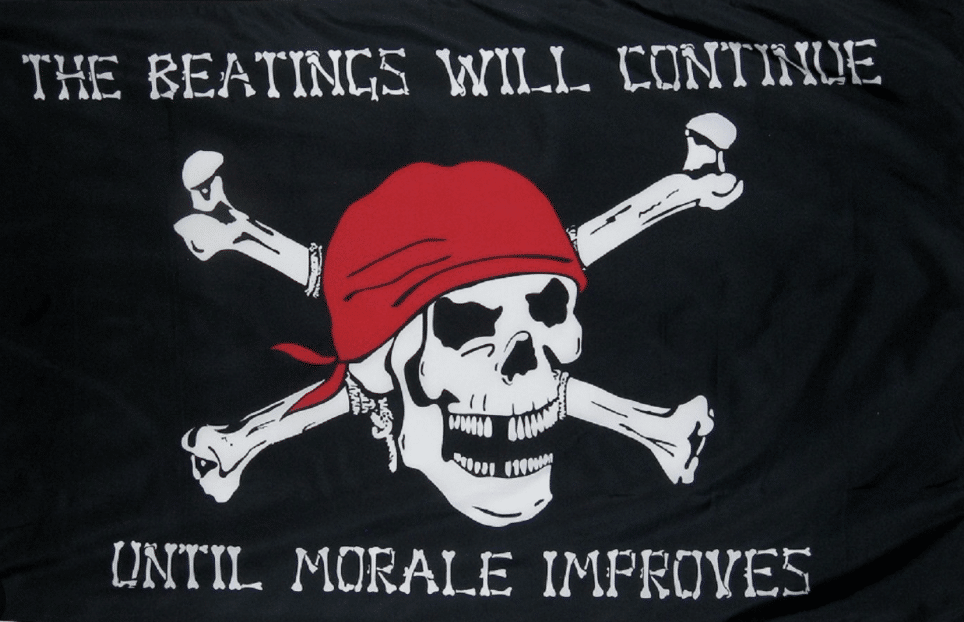
The next morning, I arrived to find a massive banner hanging over the door: “The beatings will continue until morale improves.”
To say the decision was unpopular would be an understatement. Mutiny didn’t feel out of the question.
Nine Months Later
Six months in—no more DUIs.
The unit was more focused, more productive. There was less stupidity, more cohesion.
Yes, people still said, “All we do is work. There’s no fun anymore.”
But we had planted something important: standards. Accountability. Trust.
At the nine-month mark, we threw a massive party at the lake.
Yes, there was alcohol.
But there was also a plan—transportation, safety, designated drivers.
The commander stood up and gave a speech that still sticks with me:
“We are professionals. There is a time for work, and a time for play. It’s on us to know the difference.”
That team went on to do incredible things.
The 15 months I spent with them were some of the best of my career.
We sacrificed short-term climate—and built an extraordinary culture.
Now It’s Your Turn
So, what do you think?
What are your thoughts, ideas, and concerns?
We need this conversation—not just across the Department of Defense, but across our entire society.
We all agree: something needs to change.
The question is—are we willing to endure short-term discomfort to create long-term transformation?
Let’s start with common ground. Let’s lead the hard changes.
And let’s build the culture our people—and our mission—deserve.